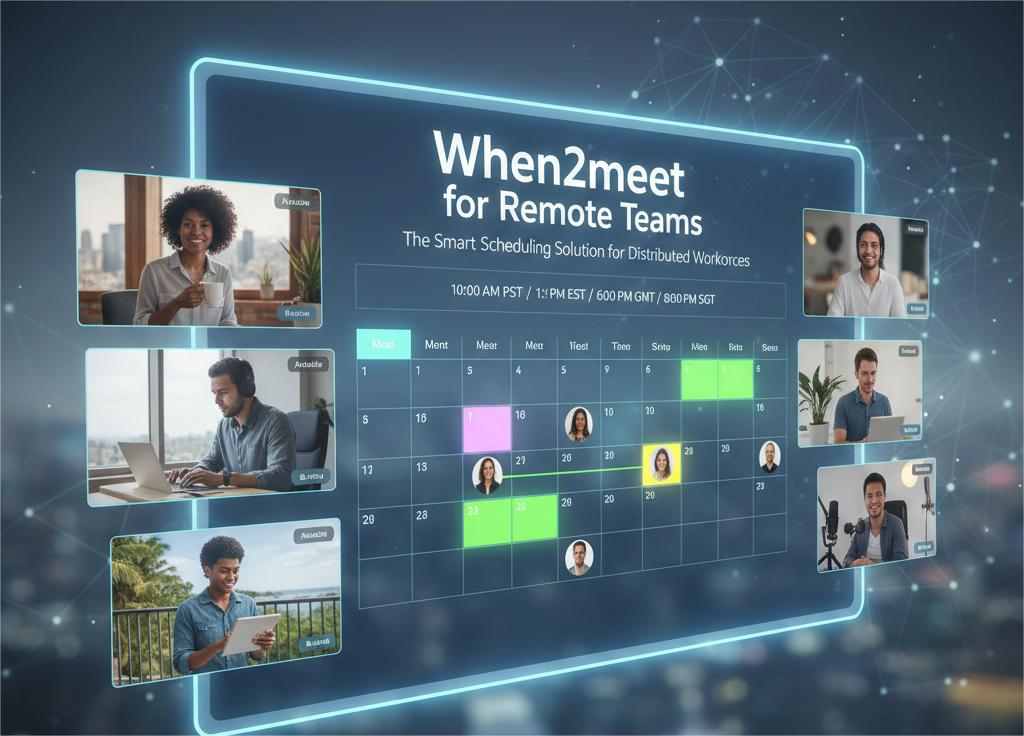
Remote work has transformed how teams collaborate — but scheduling meetings across time zones and busy calendars remains one of the biggest challenges. That’s where When2meet becomes an essential productivity tool.
In this guide, you’ll learn how When2meet for remote teams helps distributed workforces schedule meetings faster, reduce communication friction, and improve overall collaboration.
🌐 What is When2meet?
When2meet is a free online scheduling tool that allows multiple people to compare availability and identify the best meeting time without creating accounts or sharing personal calendar data.
With its simple interface and visual availability grid, remote teams can coordinate meetings in minutes instead of days.
🧑💻 Why Remote Teams Need When2meet
Remote teams operate across locations, time zones, and work schedules. Traditional scheduling often leads to long message threads and unnecessary delays.
Key Benefits for Remote Teams:
- No Account Required – Everyone joins instantly
- Fast Scheduling – Find overlapping availability in seconds
- Time Zone Friendly – Works seamlessly across regions
- Clear Visual Interface – See team availability at a glance
- 100% Free – No subscription costs
🧭 How Remote Teams Use When2meet
Step 1: Create a Meeting
Choose potential dates and time ranges on When2meet.
Step 2: Share the Link
Send the meeting link to team members via Slack, email, or chat.
Step 3: Mark Availability
Each participant highlights when they are available.
Step 4: Pick the Best Time
When2meet automatically shows overlapping time slots.
💼 Common Use Cases for Remote Teams
| Situation | How When2meet Helps |
| Team Meetings | Find weekly sync times |
| Client Calls | Coordinate across time zones |
| Project Check-ins | Align busy schedules |
| Workshops | Schedule group sessions |
| Hiring Interviews | Compare interviewer availability |
⚡ Why When2meet Works Better Than Traditional Scheduling
Instead of sending dozens of emails or calendar requests, When2meet allows everyone to visually share availability in one simple interface. The result is faster decisions, fewer delays, and smoother teamwork.
🔐 Security & Privacy
When 2 meet, respect privacy. No personal calendars, emails, or sensitive information are required. Participants simply enter a name and mark free time.
🚀 Best Practices for Remote Teams
- Include wide time ranges to increase overlap
- Consider different time zones when selecting options
- Set deadlines for responses to avoid delays
- Finalize the meeting once majority availability is clear
🌟 Final Thoughts
For modern distributed workforces, When2meet for remote teams is a powerful, lightweight scheduling tool that removes friction from meeting planning. Whether you’re coordinating global teams or managing freelance collaborators, When2meet delivers fast, stress-free scheduling.
👉 Try When2meet today and simplify your remote team coordination.
FAQs – When2meet for Remote Teams
1. What is When2meet used for in remote teams?
When2meet helps remote teams find the best meeting time by comparing each team member’s availability in one shared scheduling grid.
2. Is When2meet suitable for teams in different time zones?
Yes. When2meet works perfectly for global teams by allowing members in different regions to mark availability based on their local time.
3. Do remote team members need an account to use When2meet?
No. When2meet does not require sign-ups or logins, making it fast and easy for all team members to participate.
4. Can When2meet be used for client meetings and interviews?
Absolutely. Remote teams frequently use When2meet to schedule client calls, interviews, workshops, and internal meetings.
5. Is When2meet free for business use?
Yes. When2meet is completely free with no subscription fees, making it ideal for startups, freelancers, and remote teams.
6. How does When2meet improve productivity for remote teams?
By eliminating back-and-forth emails and messages, When2meet helps teams schedule meetings faster and stay focused on productive work.
7. Is When2meet secure for professional use?
Yes. When2meet does not collect personal information or require calendar access, ensuring privacy and security for all participants.